

The Burning Bush
by Alison Powers, Green Beverly Volunteer
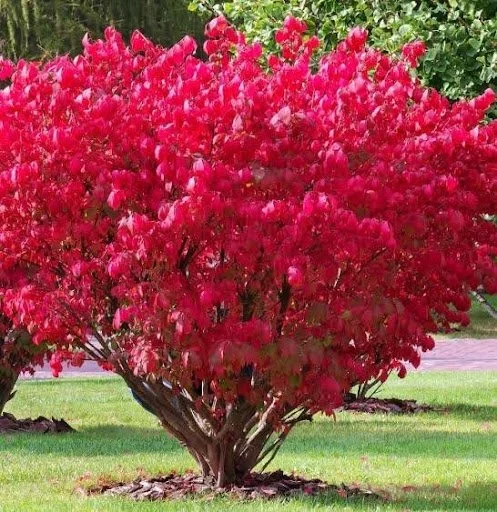
You may recall the story of the Burning Bush from the Bible in which God appeared to Moses as a bush that miraculously burned but was not consumed. Fast forward roughly 3,000 years, we also have a bush which “burns” (yet is unlikely to be the same plant which Moses encountered).
Meet Euonymus alatus (pronounced “yoo-ON-i-mus a-LAY-tus), commonly known as Burning Bush. Its other common names are Winged Euonymus, Winged Wahoo, or Winged Spindle. Native to East Asia (Japan, Korea, and central China), the burning bush arrived in North America around the 1860’s as a popular ornamental plant prized for its vibrant Autumn red foliage, as well as its red berries and unique corky "wings" on its twigs.
Fast forward to the 1970s, when folks started saying, “hey, this bush while beautiful, is taking over forests, gardens and roadsides”. People realized that this non-native bush tends to escape cultivation and spread uncontrollably to form dense thickets in natural habitats thus posing a significant ecological threat. It very quickly and aggressively outcompetes native plants for water, sunlight and nutrients, reduces biodiversity, alters the soil, and harms wildlife, leading to ecosystem degradation and potentially significant costs for control and management. Phew! In other words, this bush is Bad News!
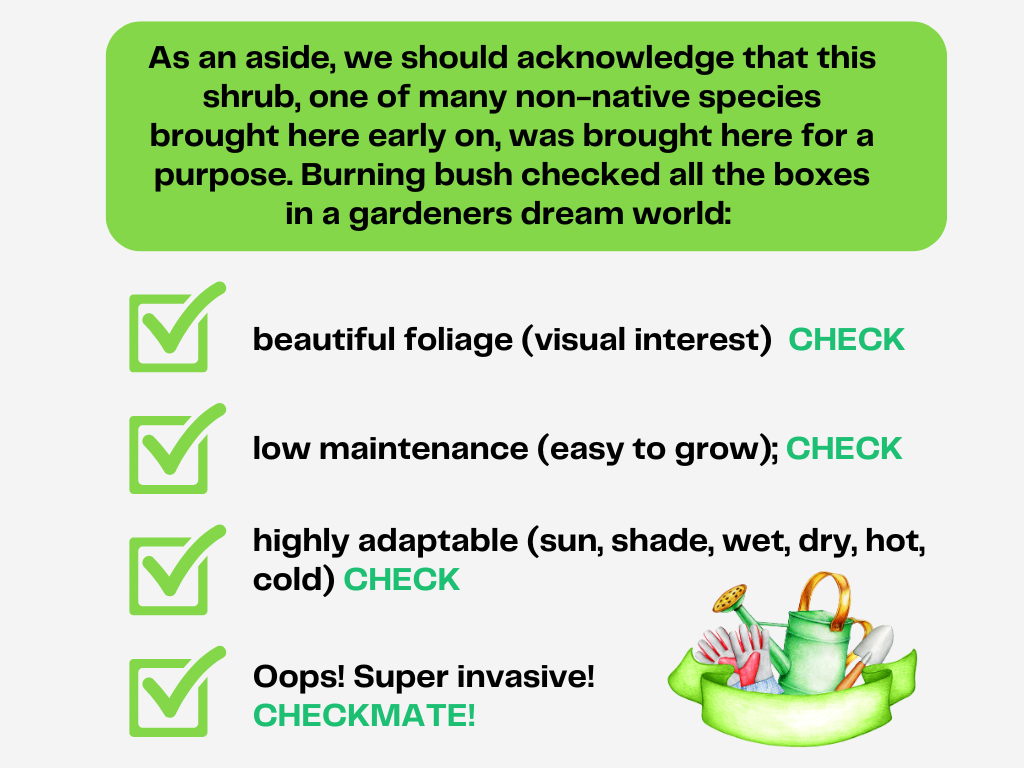
In 2005 Massachusetts finally classified the burning bush as an invasive species. In 2006 it officially banned its importation, but it wasn’t until 2009 that propagation of the shrub was banned. While found in the wild in 25 states (so far), burning bush is now recognized as an invasive species in 21 states.
Perhaps you’re thinking right now about that one burning bush in your own yard that’s probably been there for 20 years or more. It’s likely pretty darn big. These bushes can get to be 15-feet tall or more and just as wide. You might be saying, “I don’t see it taking over my garden areas. What’s the big deal?” Just because you don’t see it as a “problem” in your yard, doesn’t mean it is not a problem not so far away. So how does this fiery beast of a bush spread like wildfire?
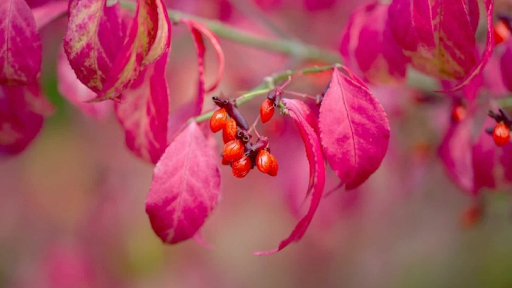
The primary reason burning bush is considered invasive is because of its prolific seeding, which quickly sprout to form dense stands that outcompete native vegetation. Those little red berries contain up to four seeds each. Just one mature shrub is estimated to produce around 1,200+ seeds in a single year. Let’s do the math:
1,200 x 4 = 4,800 seeds for just one shrub per year!
YIKES!
Birds are the primary cause of the rampant spread by eating those attractive berries then scattering the digested seeds far and wide (such as in wooded areas and wetlands). Unfortunately, these berries are not a good fat/energy food source (kind of like processed foods) for our native birds and critters. We can certainly do better for them in our public spaces and in our own backyards and gardens.
Another way this shrub can propagate is by a method called “layering.” If a branch, whether still attached to the living shrub or one that has been cut off and comes in contact with the ground, it can root and grow into a new shrub.
You see the problem here: One burning bush grows many, many more burning bushes….
EVERYWHERE!
Don’t worry. The state will not be sending an ISP (Invasive Species Patrol) to demand that you remove the shrub from your yard. Just so you know, the ISP is not real. I just made that up. But I do hope you will consider getting rid of it (hint-hint). So, “How does one do that” you ask?
You can get rid of them at any time of year, but it’s easiest to begin in the winter by trimming off all the branches while they are bare. Cutting off the branches first makes it much more manageable to dig the roots out after the ground has thawed in early spring. Afterwards, you might have burning bush seedlings popping up for a few years, but those should be easy enough to pull.
If you do decide to remove your burning bush, be sure to put ALL pieces (seeds, roots, green bits) in a black plastic garbage bag to throw away in the trash or to dry (inside the black plastic bag) in the sun for several weeks (or longer) until completely dried out and dead. Do not throw freshly cut pieces into your home compost pile. Backyard piles just aren’t hot enough, so drying/bagging is crucial to prevent re-sprouting. In fact, do not even send your freshly cut debris to the local composting dump in those brown yard waste bags. A commercial “hot” composting site might be able to handle the debris, but it’s always best to check first.
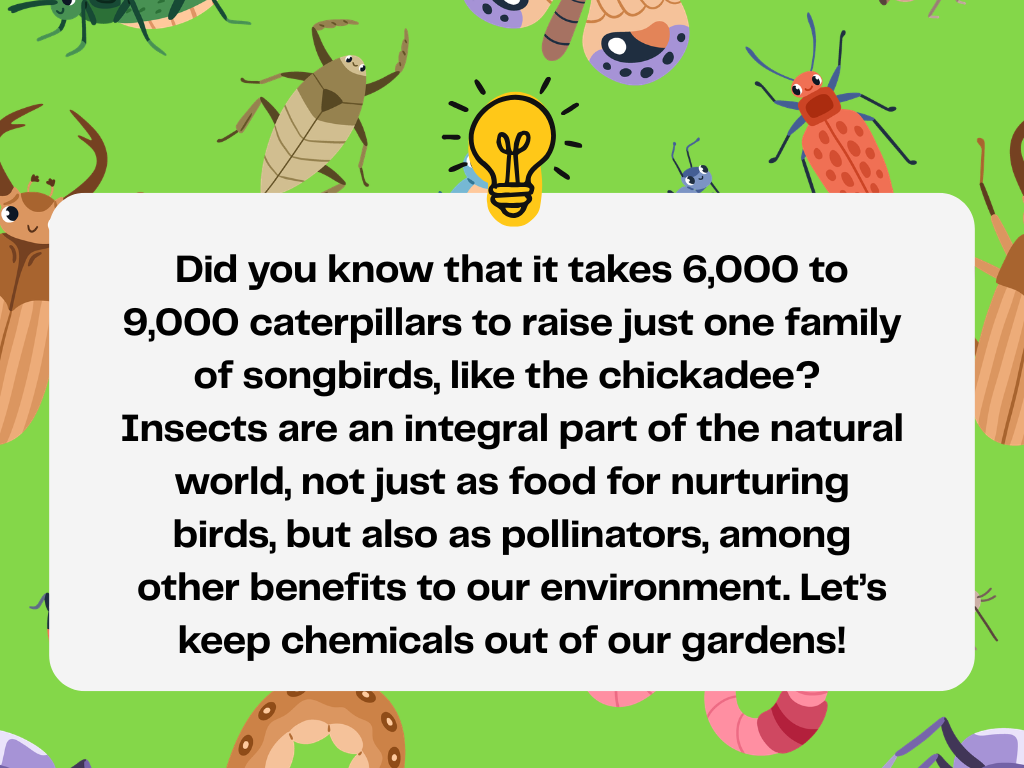
I would highly discourage chemical means to remove your bush. Not only will you potentially kill every plant nearby but will likely kill every insect (good and “bad”) that encounters the area (even if it’s labeled to not harm beneficials). Anything chemical related in your yard/gardens is just no good.
Now if your burning bush has gone to the garbage inferno to be destroyed for all eternity, you’ll need to fill up that empty space in your garden. Good native alternatives would include Ninebark (Physocarpus opulifolius), Highbush Blueberry (Vaccinium corymbosum), Black Chokeberry (Aronia melanocarpa), Summersweet (Clethra alnifolia), and American Cranberry Bush (Viburnum opulus var. americanum), to name a few.
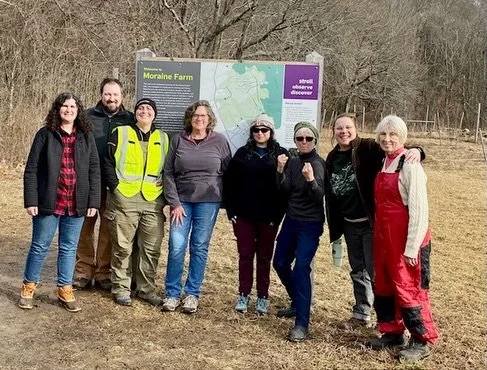
If you would like to see first-hand the invasive spread of this flaming beast, I suggest you take a walk on a trail through any one of our local forests or wetlands, like Sally Milligan Park, Long Hill or even the Danvers Rail Trail to name a few. JC Philips Nature Preserve (parking and trail access located at 779 Cabot St, Beverly) would also be a great place to see the invasive nature of the burning bush (and other “baddies”). This 85-acre nature preserve, while owned by Beverly (~53 acres) and Wenham (~32 acres), it is jointly managed with conservation restrictions by the Trustees of Reservations and the Essex County Greenbelt. Originally part of Moraine Farm, it was acquired to protect the watershed of Wenham Lake.
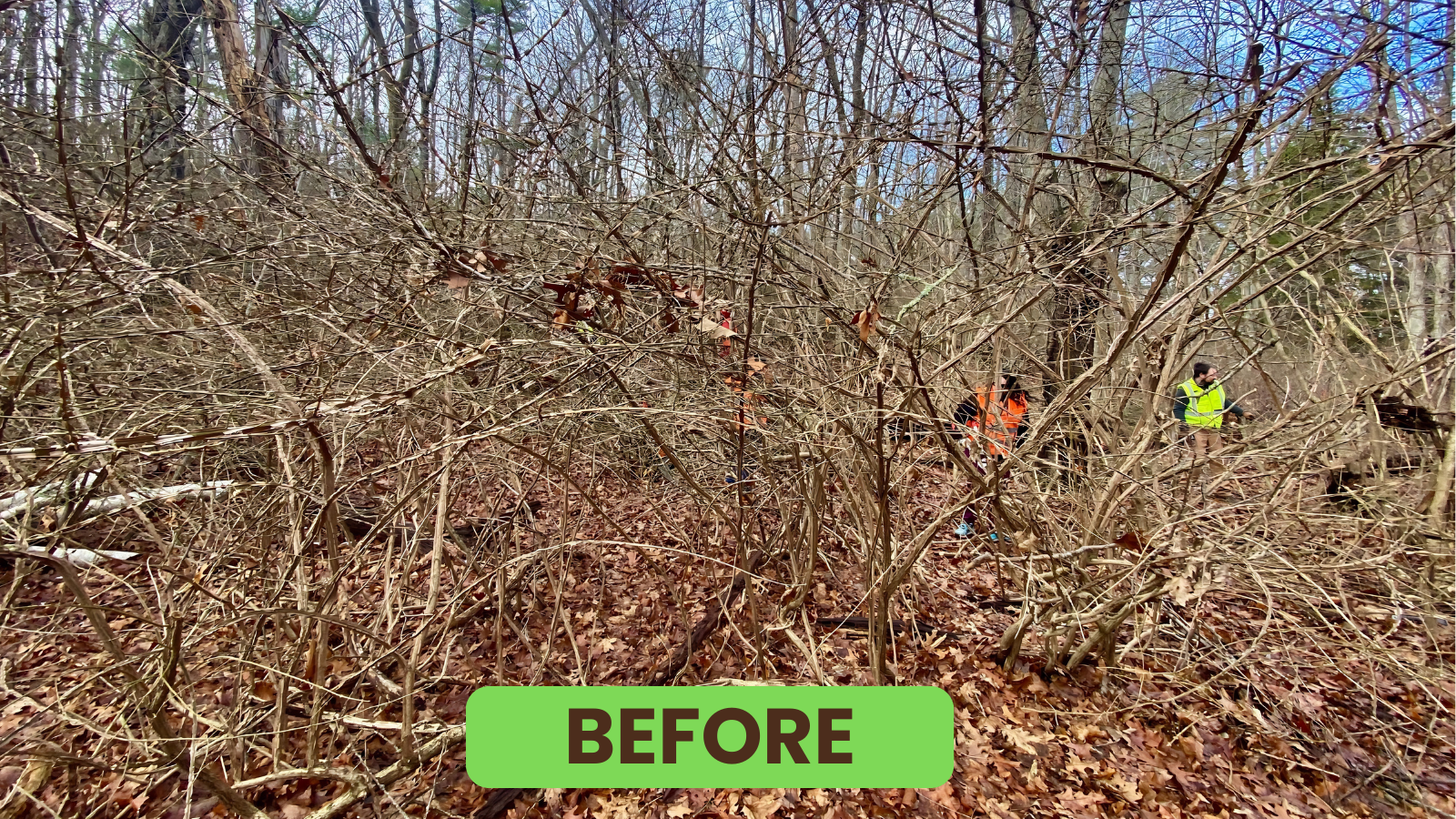
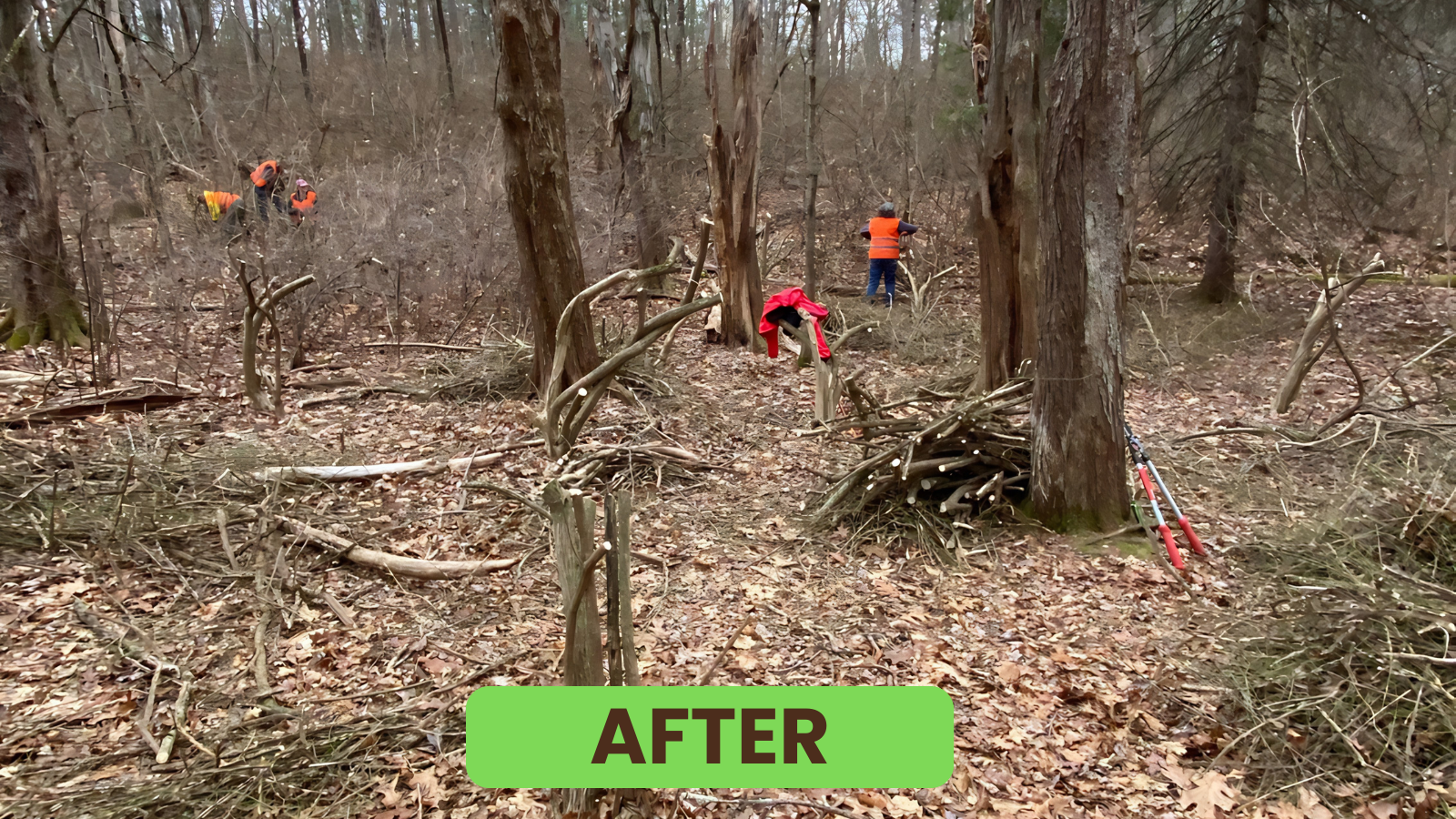
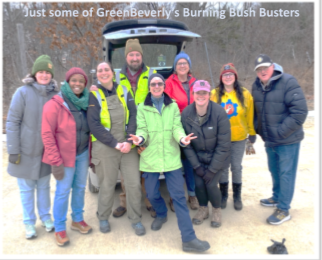
Green Beverly has a small but dedicated group of volunteers (the Burning Bush Busters!) currently working at JC Philips every Saturday (weather permitting) during the winter months (November through the end of March) to try to eradicate not only burning bush, but several other invasive species as well. The understory of the forest and wetland areas at this specific location are loaded with burning bush - acres of them - literally destroying the biodiversity of this once healthy ecosystem.
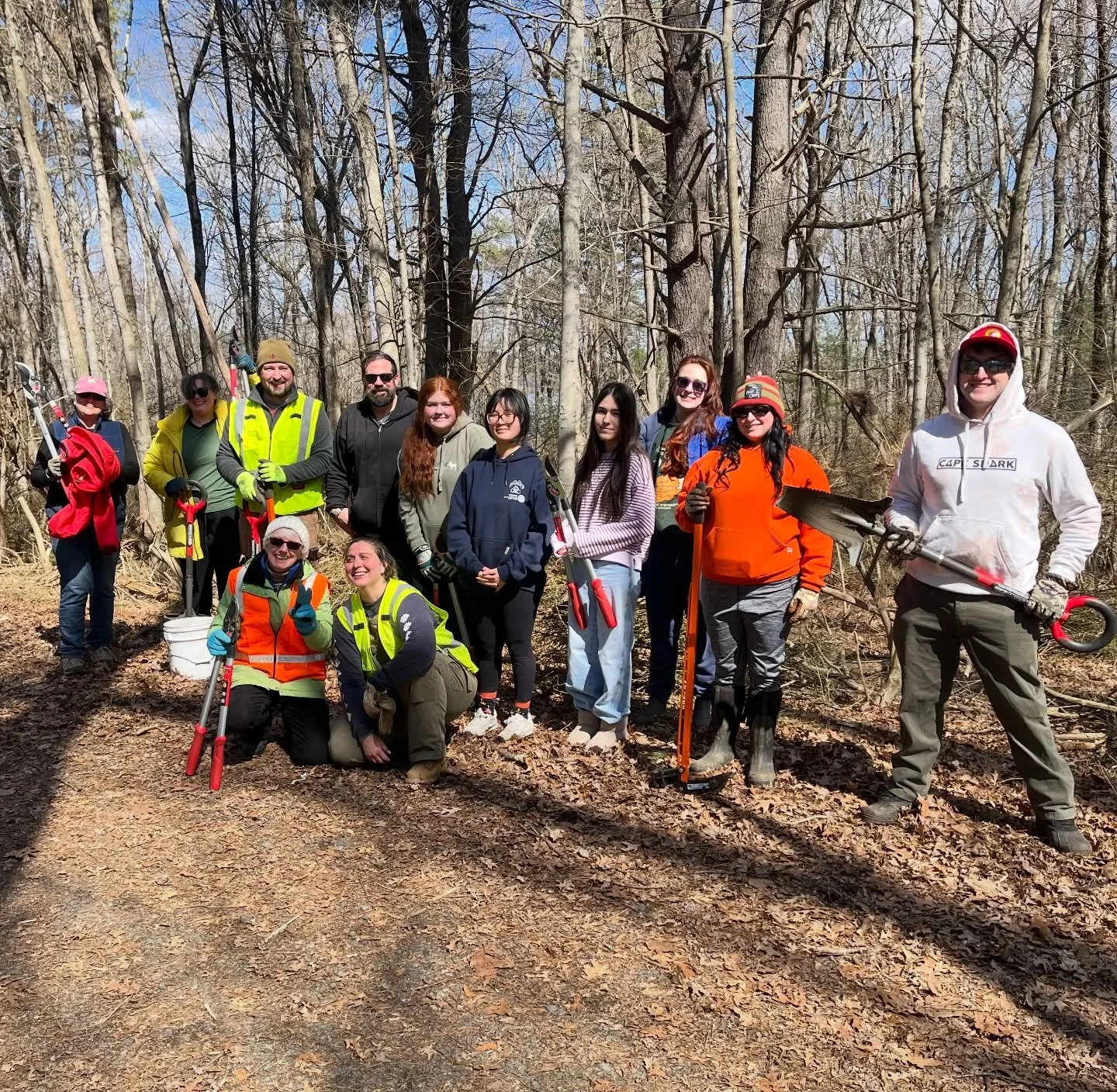
Perhaps you’ll consider volunteering with Green Beverly or transforming your own yard and gardens to be part of the story of Green Beverly. Let’s work together to care for our local habitats for the wildlife that depend on native vegetation for food and shelter. Come join us. No experience necessary. Volunteers will show you what to do.
Let’s Bust-A-Bush (or two… or three…. or hundreds)!